
Malaysia
1 Fulbright-Fogarty Public Health Fellowship Award
Accepted Degree Levels
|
Grant PeriodFlexible StartGrant Length6-10 Months |
Award Type
Discipline-Specific Awards
Award Profile
The Fulbright-Fogarty Fellowships in Public Health are offered through a partnership between the Fulbright Program and the Fogarty International Center of the U.S. National Institutes of Health. These awards were established to promote the expansion of research in public health and clinical research in resource-limited settings.
Fulbright-Fogarty Fellowships carry the same benefits as the traditional Fulbright Study/Research grants to the host country. The Fogarty International Center, NIH, will provide support to the research training site and may provide orientation for the fellows at the NIH.
For more details on Fulbright-Fogarty Fellowships and application instructions, please review the ‘Type of Awards’ page: https://us.fulbrightonline.org/applicants/types-of-awards/fulbright-fogarty-fellowships-in-public-health
Grant Length
Grant Period
The grant is for 6-10 months, with the earliest start on October 2027, and the latest end on June 30, 2028.
Orientation
Pre-departure orientation two weeks before departure date.
In addition, Fulbright-Fogarty Fellows will be required to participate in a Pre-Departure Orientation with NIH in July.
Candidate Profile
Must be enrolled in an accredited doctoral-level program (MD, PhD, DDS, or comparable degree from an accredited institution) in public health, government, business, design, engineering, education, medicine, nutrition, law, pharmacy, dentistry, veterinary medicine, and nursing. Eligible doctoral degrees include, but are not limited to: DMD, DC, DO, DVM, OD, DPM, ScD, EngD, DrPH, DNSc, DPT, PharmD, ND, DSW, PsyD, JD and Doctorate of Philosophy in Nursing.
Health-professional students who wish to interrupt their studies for a year or more to engage in full-time research training before completing their formal training programs are also eligible.
By the start of the program year (July 2027), fellows must be an MD (and other professional degrees) student who has completed their 3rd year or a Ph.D. candidate who has completed their Master’s level requirements (i.e., post-qualifying exam).
What is life like for Fulbrighters in the host country?
Applicants are expected to research their host country. Application materials should indicate a clear commitment to the host country community and a description of how you will engage with it.
Meet Larry Zheng, a 2024 U.S. Fulbright Student Researcher alum whose project focused on identifying reef shark nursery habitats using drones. Hosted by Universiti Malaysia Terengganu, Larry combined cutting-edge technology with field research to better understand and protect Malaysia’s marine ecosystems.: Day in the Life – Fulbright Marine Biologist Larry Zheng ('24)
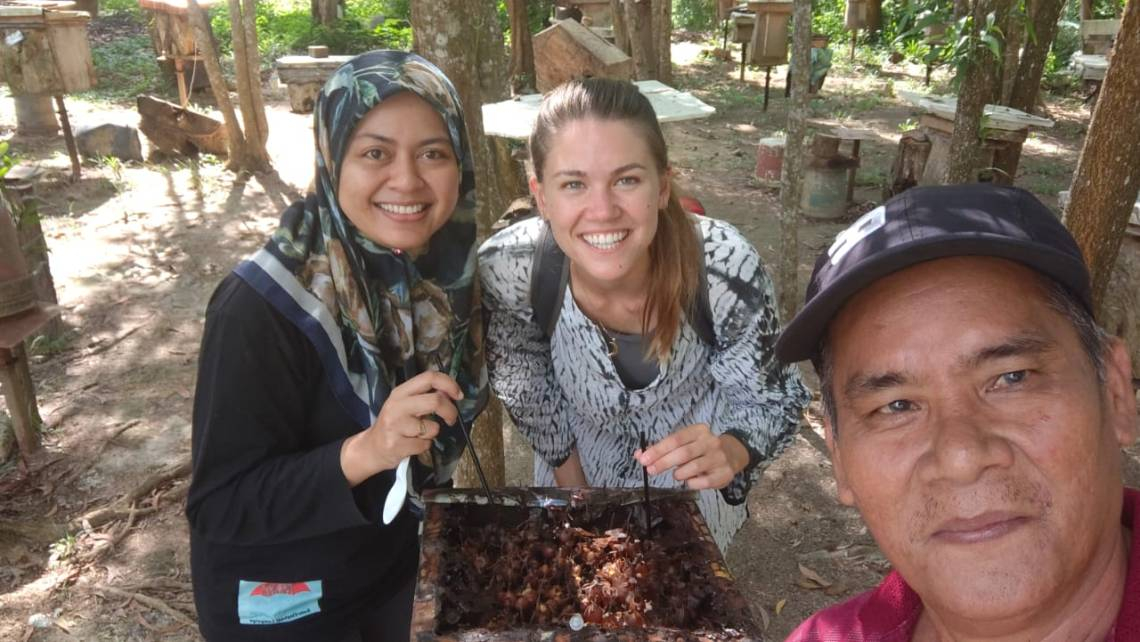
Emma Crushing, Fulbright U.S. Student Researcher Alum '21-'22 with Dr. Nurzhafarina Othman (left) from University Malaysia Sabah
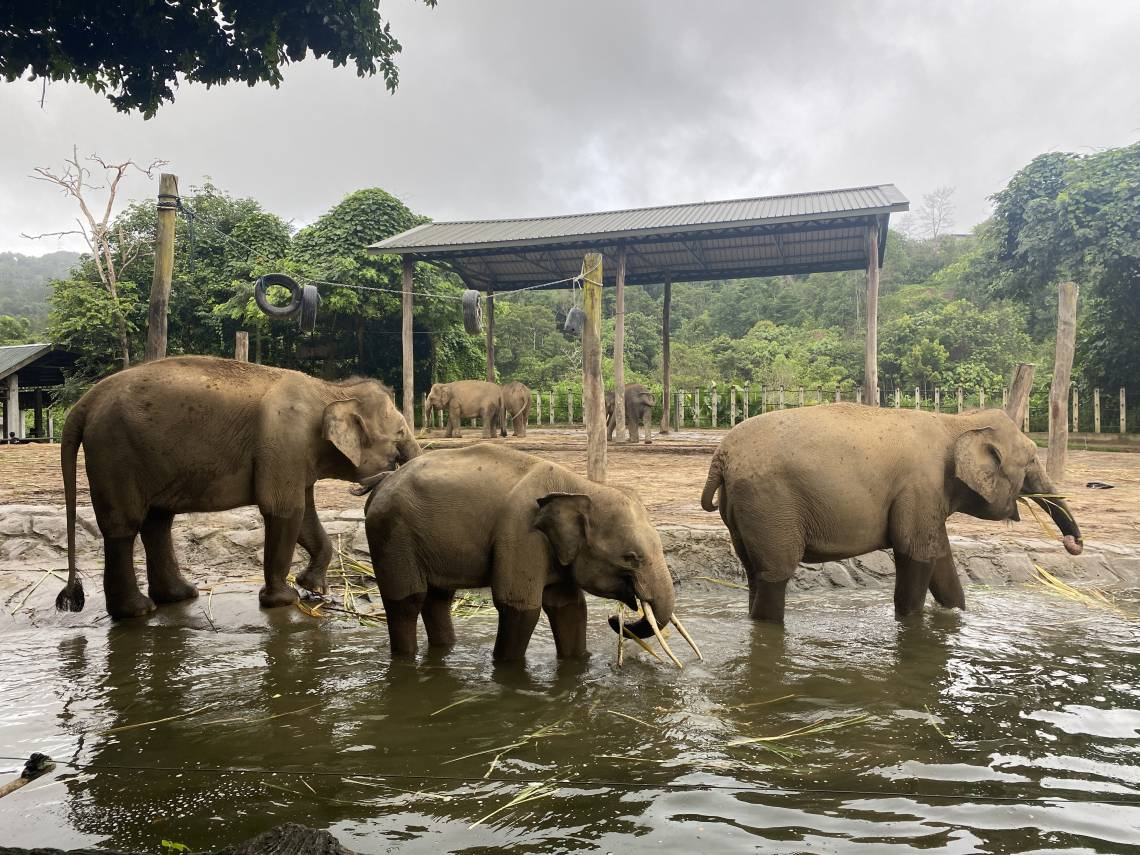
Kinabatangan River Wild Elephants located in northeastern Sabah, Malaysia
My first week in Kota Kinabalu was full of exploration. Walking around the city streets I was in awe of the incredible smells wafting out of the restaurants, the number of people who smiled and said hello to me, and the breathtaking views of Gaya Island across the water. I finally got to meet my host professor in person, and she introduced me to her colleague, an elephant expert I had heard of back in the States but never thought I would get the chance to meet, let alone work alongside. Both women were incredibly accomplished, yet so humble and easy to talk to, and I immediately felt welcomed and supported. As I quickly jumped into my research work at Lok Kawi Wildlife Park, I realized that friendliness was not an exception but rather the norm. With each new person I met, I was floored by their warm, welcoming personalities, their open curiosity in learning about me, and their seemingly effortless and unprovoked generosity. The director of the wildlife park made sure I had a place to stay and unrestricted access to the park. When her office assistant learned I had taken Grab to reach the park, he immediately offered to drive me back and spent the drive recommending all the best food and activities in KK. The elephant keepers I spent many of my days with helped me in my quest to learn Malay, and we developed a system of exchanging language lessons: they corrected my pronunciations while I explained the California slang that peppers my vocabulary. I thoroughly enjoyed the process of developing relationships with these individuals and so many more who taught me more than I could have ever thought to ask. Through discussions of history, current events, holiday celebrations, and daily life, my conversations compared and contrasted U.S. and Malaysian experiences and traditions, and it was exciting to see the overlap and the uniqueness in each. As I head back to the U.S., I feel that the Fulbright experience has brought me more confidence in my abilities as a scientist, as a communicator, as a traveler, and as a global citizen. All of these heightened abilities will help me during the pursuit of my next degree, throughout my career, and the rest of my life. The Malaysian perspective on community-driven conservation, the remarkable kindness and generosity of the Malaysian people, and the scientific wisdom imparted to me by my hosts will stick with me and influence the way I see the world and the choices I make moving forward. I will cherish the memories I made developing a deeper understanding of Bornean elephants, Malaysian pop culture, conservation strategies, night street food markets, and of the streets and residents of KK. I am hopeful my path will someday lead me back to Malaysia, preferably sooner rather than later.
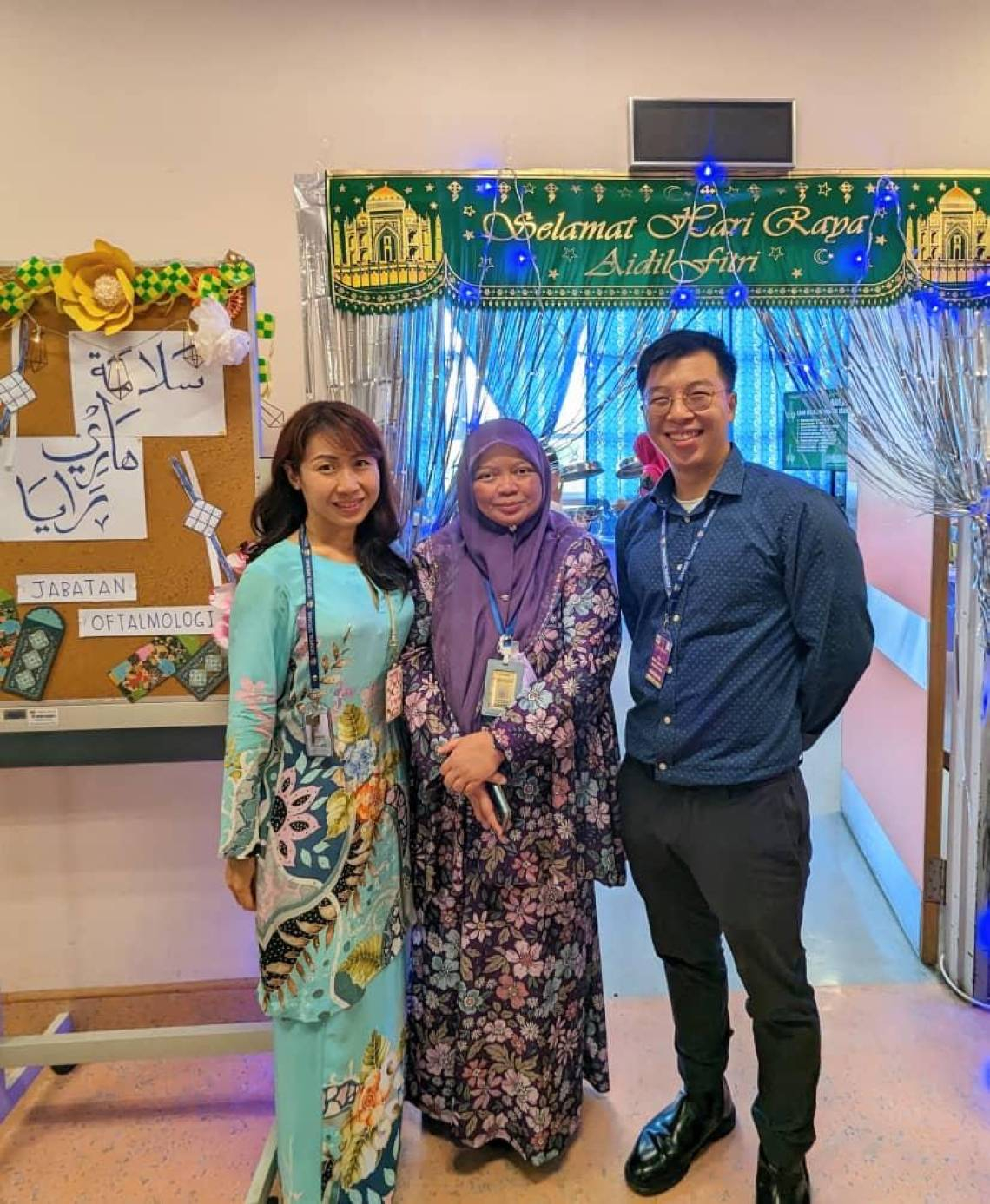
(Right to left) Allan Lee Fulbright U.S. Student Researcher Alumni '22-'23 with his hosts from Opthalmology at Hospital Serdang.
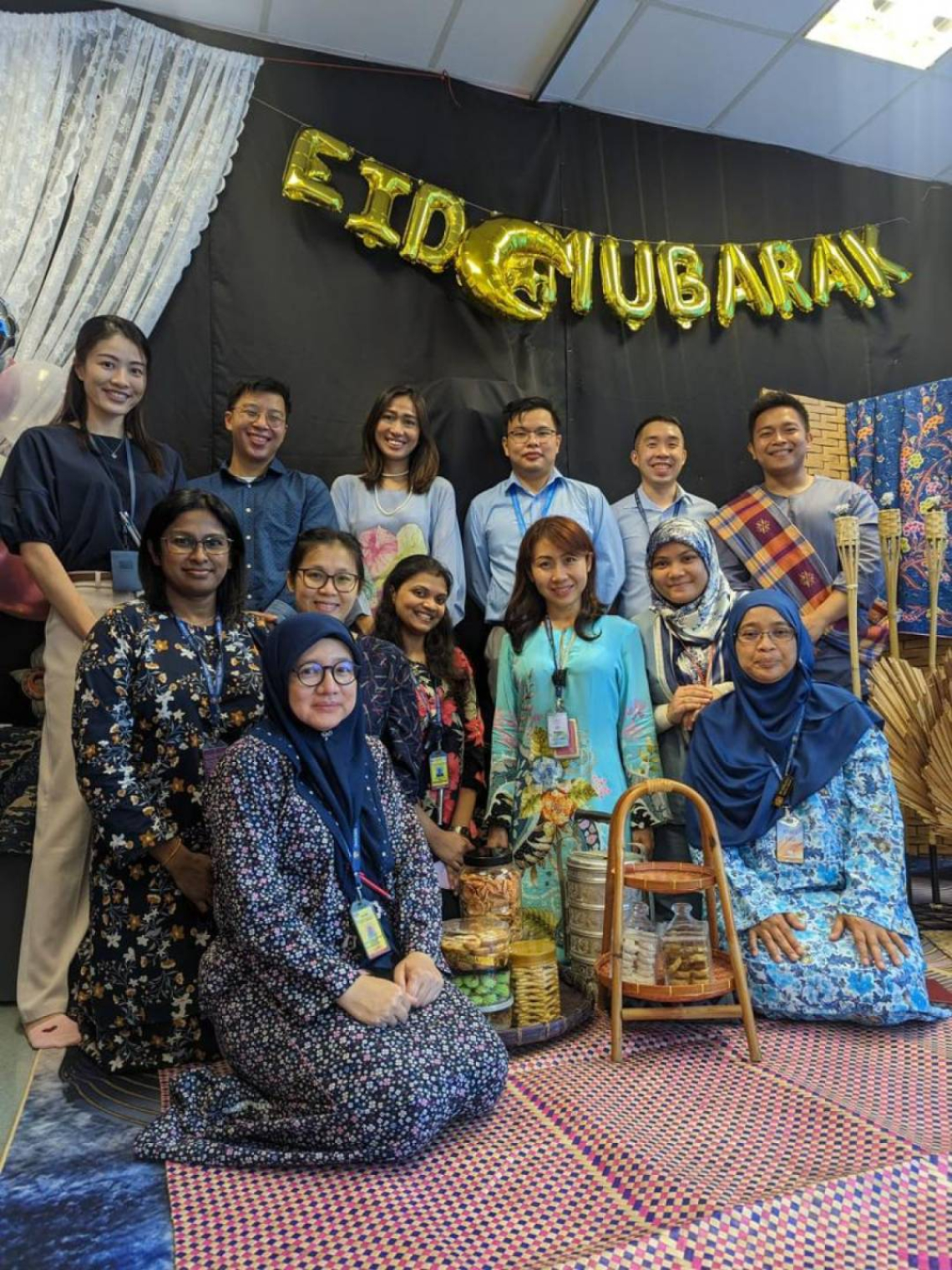
Allan joyfully marking Eid festivities with his Ophthalmology colleagues at Serdang Hospital.
My Fulbright experience has been both a professional and deeply personal journey that I will cherish for the rest of my life. My time in Malaysia has allowed me to lead and engage in meaningful research which I hope to continue back in the United States, provided me valuable global clinical experience, and has allowed me to explore and integrate myself into a new culture. While conducting research is never without its obstacles and barriers, I am happy to have accomplished and experienced so much. My initial research started at the ophthalmology department at Hospital Serdang, a government hospital right outside of Kuala Lumpur. In Serdang, I was able not only to better understand the medical procedures my research aimed to address, but I was also able to comprehend the Malaysian healthcare system and its differences from the privatized US healthcare system. The discrete divisions between public and private healthcare in Malaysia, on top of my experience working in a public hospital, such as Hospital Serdang, allowed me to target my research to meet the specific needs and preferences of the Malaysian healthcare system and its patients. My research specifically focused on the development of a medical stent for a procedure known as dacryocystorhinostomy, an incredibly specialized procedure that only a few surgeons in Malaysia are able to perform. Because of this, many patients travel many hours, even across oceans, to Serdang to receive life-altering care. Knowing that medical care and medical technology must reflect the unique experiences and customs of its patients, my research has dramatically transformed from a strictly technical project and includes the vast needs of the diverse populations in Malaysia, I found it important for myself to relocate to Kelantan to de-center my research from Malaysia’s urban capital. Undoubtedly, Kelantan presented a different patient population than the ones I witnessed in Hospital Serdang and it presented new perspectives to my research. It quickly became clear to me that even the practice and provision of medicine was changed to reflect the needs of patients. Patient-provider interactions with rural patients who had a very different relationship with modern medicine were drastically different than the ones I saw in Serdang. For one, many rural Malaysians only seek care when experiencing debilitating symptoms, rarely seeking screenings or preventative service and doctors constantly work with patients to make sure patients stay healthy. My technological research reflects the cultural and traditional considerations of Malaysians not only in Kuala Lumpur, but also rural and remote patients. While my current research cannot address all aspects of healthcare accessibility and acceptability in Malaysia, I know that my future endeavors in medicine will explore the ways doctors can administer care and new technologies through community partnerships that are deeply rooted in local customs. Over these 10 months, I fell in love with Malaysia. I stuffed myself with nasi kukus and roti canai, met great friends and advisors in which I hope to work with in the future, and traveled to unforgettable destinations. These experiences have painted a picture of Malaysia, a landscape of care; I have used these diverse experiences in my research and I hope to use these experiences for my future endeavors.
Eligibility
9 Months
Degree Level of Applicant
- Doctoral
Special Application Instructions
Select "Fulbright-Fogarty" for Award Type in the application. All Fulbright-Fogarty applicants pursuing a placement in Malaysia should select “Public Health” as the Field of Study in the Fulbright application.
Foreign Language Evaluation (FLE) Form
If required, submission of the Foreign Language Evaluation (FLE) form is mandatory, even if you have advanced skills or are a native speaker of the language. Failure to submit the required FLE form may impact your eligibility.
Additional Information: Proficiency in Malay is not required. However, applicants proposing to do research requiring extensive contact with local populations and/or the study of Malay language texts must have a competence in Bahasa Malaysia. Projects involving extensive interviewing, especially in rural areas, will require more advanced language skills.
Applicants without Malay language skills should include plans for language study in their Fulbright proposals and should study Malay concurrent with their research after arriving.
Fulbright Proposal Types
Yes
No
Affiliation
Applicants are required to obtain a letter of support from the site contact.
When emailing project contacts, please include all contacts and attach a current CV and a concise statement (less than 500 words) about your interest in the program (especially your primary research interest).
Affiliation Fees/Tuition
Award Benefits
- A stipend broadly based on the cost of living in the host country. These funds may be used by the grantee to support housing, meals, and incidental costs during the grant period.
- International travel benefits
- Accident & sickness health benefits
- 24/7 mental health support line for urgent and non-urgent situations
- 12 months of non-competitive eligibility (NCE) hiring status within the federal government
Stipend Amount
This is an estimated amount and is subject to change. The financial terms of the grant will be confirmed in the grant document issued after selection.
Monthly Stipend fee of USD 840.00
Monthly Housing allowance of USD 370.00
The stipend and housing allowance will be disbursed every month to your Malaysian bank account.
Payments will be made at the end of each month, before the grant date for the following month.
The exchange rate applied for the stipend will be based on the published exchange rate from Bank Negara Malaysia, which is posted on the first business day of each month during your grant period in Malaysia.
One-Time Allowances
This is an estimated amount and is subject to change. The financial terms of the grant will be confirmed in the grant document issued after selection.
- Excess baggage fees
- Language training allowance
- Research/Materials allowance
- Settling in allowance
The one-time allowances in US Dollars will be disbursed as part of the first grant payment.
- Bench fee of USD 500.00 (Cover the specific cost associated with visa charges, research work, laboratory work, fieldwork, or any expenses related to your project work)
- Professional allowance of USD 500.00 (Covers the cost of educational and professional materials, photocopying, registration fees, travel to and from professional meetings, and conferences to other Malaysian academic institutions to consult with colleagues.)
- Relocation allowance of USD 1,000.00
Additional Grant Benefits
Reimbursable Expenses
- Baggage Allowance USD 600.00
- Book Allowance USD 200.00
- Language Allowance USD 500.00
The actual amount spent (up to the maximum allowed) for books, language, and excess baggage expenses will be reimbursed and must be supported by original receipts.
Estimated Cost of Living
Consider using cost of living comparison websites to gain a better understanding of the potential costs in your host country.
The cost of living in Malaysia can vary widely depending on lifestyle, location, and personal preferences.
Here are some of the typical costs associated with living in Malaysia as a student in 2024, converted to USD:
Rent: Off-campus housing costs can range from $84 to $315 per month, depending on location and amenities.
Food: Eating out at inexpensive restaurants can cost around $2.10 per meal, while a meal at a mid-range restaurant can cost around $6.30. Groceries for home cooking can cost around $63-$84 per month.
Transportation: Public transportation costs vary depending on the distance traveled but typically range from $16.80 - $31.50 per month.
Miscellaneous: This includes entertainment, gym memberships, personal care, books, and supplies, which can range from $42 - $84 per month.
It's recommended to use cost comparison websites for a more detailed and personalized estimate.
Dependents
Housing Arrangements
Selected grantees must arrange housing at their sites on their own. They can seek advice and assistance from their Malaysian collaborators, counterparts, and contacts. The host institutions normally have an international office that assists foreign students and researchers to identity housing options.
When requested, MACEE can also connect selected grantees with Fulbright alumni to give housing advice.
A monthly housing allowance of USD 370.00 per month is allocated as part of the grant.
Visa/Information
The Fulbright Commission in Malaysia (MACEE) will assist grantees in navigating the process to secure the necessary permits and visas. Detailed procedures for obtaining a research permit will be communicated to grantees after selection.
APPLICATION TO CONDUCT RESEARCH IN PENINSULAR MALAYSIA
All researchers intending to conduct research in Malaysia must obtain prior written approval from the Government of Malaysia. Detailed information on the rules of application to conduct research in Malaysia may be obtained from Economic Planning Unit at https://www.epu.gov.my/en/resources/guidelines-and-procedures/undertaking-research-malaysia
APPLICATION TO CONDUCT RESEARCH SABAH, EAST MALAYSIA
All researchers intending to conduct biological/biodiversity research in Sabah, Malaysia must obtain prior written approval from the Government of Sabah. Detailed information on the rules of application may be obtained from Sabah Biodiversity Center at https://sabc.sabah.gov.my/quick-info-roles#anchor-researcher
APPLICATION TO CONDUCT RESEARCH SARAWAK, EAST MALAYSIA
All researchers intending to conduct biological/biodiversity research in Sarawak, Malaysia must obtain prior written approval from the Government of Sarawak. Detailed information on the rules of application may be obtained from the Sarawak Biodiversity Center https://www.sbc.org.my/index.php
Centre of Excellence in Research in AIDS, University of Malaya - GHES
U.S. University Consortia: GHES
Summary of Site
The University of Malaya (UM) in Kuala Lumpur, Malaysia is known for its quality teaching and research. The Centre of Excellence in Research in AIDS (CERiA), located at UM, conducts epidemiological, clinical, and social science research on HIV and other infectious diseases, with a focus on at-risk communities- particularly people who inject drugs, people who experience incarceration, men who have sex with men, and others.. Since the establishment of CERiA in 2007, the center has conducted several epidemiological and prevention and treatment research projects involving HIV-infected and HIV-uninfected people who use drugs in various settings including the community, syringe services.
Primary Contacts
- Frederick Altice, MD, MA, frederick.altice@yale.edu, U.S. Mentor (Contact for letter of affiliation)
Areas of Focus
- HIV prevention and treatment
- Implementation science
- Prisoner health
- Medication for opioid use disorder
- Substance use epidemiology
- Mobile health
- Behavioral design interventions
Below please see a list of previous or ongoing projects at this site:
- Towards a functional cure for Hepatitis B Virus: exploiting lessons from HBV-HIV co-infection (COMMIT Study)
- Dolutegravir and Darunavir Evaluation in Adults Failing Therapy (D²EFT)
- Addiction, HIV and Tuberculosis in the Malaysian Criminal Justice Setting (Harapan)
- Implementing Stigma Reduction Tools Via A Popular Teletraining Platform To Reduce Clinician Stigma And Disparities In HIV Testing, Prevention, And Linkage To Care In Malaysia
- Developing An Artificial Intelligence Chatbot To Promote HIV Testing
- Reducing Stigma in People Who Inject Drugs with HIV Using a Rapid Start Antiretroviral Therapy Intervention
- Exploring interest in telemedicine among People Who Inject Drugs in Malaysia
Language Requirement
None, but fluency in Malay, Mandarin Chinese, and Tamil are a plus.
Fulbright Program Management Contact
Fulbright Commission/U.S. Embassy Website
Fulbright Commission/U.S. Embassy Contact
Additional Online Resources
U.S. Embassy in Malaysia: https://my.usembassy.gov/
Ministry of Higher Education Malaysia: https://www.mohe.gov.my/en
Education Malaysia Global Services (EMGS): https://educationmalaysia.gov.my/
MACEE Fulbright Malaysia Facebook: https://www.facebook.com/MACEEFulbright
MACEE Fulbright Malaysia Instagram: https://www.instagram.com/macee_fulbright/
MACEE Fulbright Malaysia LinkedIn: https://www.linkedin.com/company/macee-fulbright/mycompany/
Economic Planning Unit: https://www.epu.gov.my/en/resources/guidelines-and-procedures/undertaking-research-malaysia
Sarawak Online Research Application System (SORAS): http://soras.sarawak.gov.my/soras/welcome
Sabah Biodiversity Center Official Website: https://sabc.sabah.gov.my/index.php/content/access-licence-application